Regarding the human contribution to the global warming, if few decades ago one could read in the report of the Intergovernmental Panel on Climate Change (IPCC) that there was ‘a discernible human influence on the global climate’, nowadays there is a very firm position, affirming that ‘human influence has been the dominant cause of the observed warming since the mid-20th century’ (Fifth Assessment report).
In parallel, several studies have tried to quantify the level of agreement on human-caused global warming among climate scientists, showing that between 90 to 100% of scientists have concluded that humans are the predominant cause of global warming (Anderegg et al., 2010; Doran and Zimmerman, 2009).
The public needs to know basic scientific facts
However, despite these definitive statements and the widespread agreement among experts and researchers, most part of the public is still confused about the causes of climate change and the reality of human impact on climate. A significant contribution to this public confusion comes from the large amount of misinformation available on the internet and other mainstream media.
For such pivotal and urgent challenges such as the climate change, where science and public policy converge trying to find a consistent and effective action, it is very important that the public knows the basic scientific facts, thus allowing citizens to comprehend the issue and to choose the appropriate response.
People need to know whether the problem is occurring, what is causing it, and if there is a scientific consensus, and they also need to know about the magnitude of the problem. In the case of climate change, these features can be addressed in a concrete way, considering that the fundamental physical consequences of climate change are quantifiable.
Unfortunately, several studies have documented that only a minority of the public knows these basic facts, and most of the times they don’t know at all the mechanisms of the phenomenon and the principal causes (Boykoff and Olson, 2013; Reynolds et al., 2010).
Perhaps even more striking, very few people are aware about the scientific consensus presented above, showing what is called a “consensus gap” (the discord between public perception of consensus and the real 90% consensus amongst scientists). Of particular concern is the fact that this consensus gap has been found even among science teachers and journalists.
Climate change disinformation
Considering that misinformation lowers public acceptance of climate change, slowing down the fight against it, we need to find strategies and solutions for responding to this climate change disinformation. Indeed, misinformation interferes with new learning, undermining the application of science to understanding and addressing important societal issues such as the climate change. Accurate information on the science of climate change and measures to mitigate its impacts is vital not only to inform policymaking, but also to empower individuals to make informed choices.
Thus, it’s the moment to consider science education as an important element of societal response to global climate change: there is the need to re-imagine science education in this global climate change era, and climate change has to emerge as a key issue in science education.
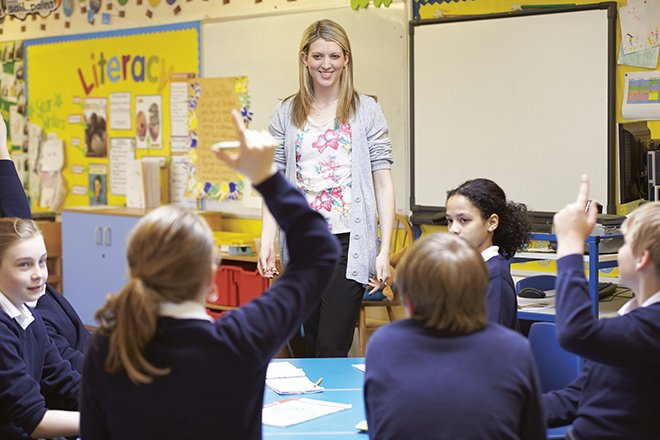
As suggested by several authors, one of the most promising arenas for addressing and counteract misinformation is, in fact, the classroom.
Students do not still have as many erroneous preconceptions about climate change as adults, they can be equipped with the tools and knowledge to distinguish between facts and myths, increasing their confidence to engage in constructive discussion with family and friends about climate change. Consequently, students may have an effect on parents' environmental attitudes and behaviour, thus giving an opportunity to reach the adult community through them.
Finally and more broadly, we need to ask ourselves how science education may support in building societies characterized by flexible, adaptive and sustainable communities: how can education help in the needed transition towards a sustainable future?
References
Anderegg, W. R. L., Prall, J. W., Harold, J., & Schneider, S. H. (2010). Expert credibility in climate change. Proceedings of the National Academy of Sciences, USA, 107, 12107–12109.
Borah, N. and Cook, J. (2017). Turning Misinformation into Climate Change Education. American Geophysical Union, Fall Meeting 2017
Boykoff, M. T., & Olson, S. K. (2013). ‘Wise contrarians’: a keystone species in contemporary climate science, politics and policy. Celebrity studies, 4(3), 276-291.
Doran, P. T., & Zimmerman, M. K. (2009). Examining the scientific consensus on climate change. Eos: Transactions American Geophysical Union, 90, 21–22.
Reynolds T W, Bostrom A, Read D and Morgan M G (2010). Now what do people know about global climate change? Survey studies of educated laypeople Risk Analysis: An International Journal 30 1520–38